By now everybody has heard about the massive egg recall due to a salmonella outbreak affecting 380 million eggs. Unfortunately for the West Valley City council they recently decided that they wouldn't vote on a proposal that would allow residents to keep backyard "urban" chickens. Of course this news is horrible timing for the city council. Hopefully residents of WVC will use this recall as leverage to get the city council to reconsider. A few backyard chickens can be a fun hobby for families who might otherwise not have the chance to be involved in farming even if it is on a small scale. Chickens offer a natural way to keep insects down thereby reducing/eliminating the need for harmful pesticides. They earn their keep with delicious, nutritious eggs.
In some of the documentaries like Food Inc and Fresh, Michael Pollan explains how cheap food isn't really cheap. That somewhere a price is paid. This recall and all the others we have seen this year are good examples of the price that is paid. I haven't bought eggs from the store in years but I would imagine that they are probably priced around $1.50-$2.00/dozen. Most local farms sell eggs for $3.00/dozen. Why the increased cost? Scales of economy obviously come into play here as does the use of government subsidized grain. Most small producers buy local unsubsidized grain which costs more than the grain the big CAFO operations are buying. Naturally the costs are going to be a little higher. For those who raise their own eggs or buy fresh local eggs, they can attest to the enormous flavor difference and as well as quality difference. One of the contributing factors to these outbreaks is the routine use of antibiotics which help build superbugs. I am sure none of this information is new to readers of this blog. Aside from the increased nutritional value and resulting increased health to the consumer, consider the cost difference. $1 to $1.50 savings every week or two.
Now consider the cost of getting sick with salmonella. Visit to the doctor, usually an emergency visit, missed work, prescriptions, etc... not to mention the risk of further illness with a compromised immune system. The bottom line, is that eating fresh and local, is cheaper in the long run. Not to mention you will likely enjoy a higher quality of life, that nutritious food offers.
Your body is worth it and you will enjoy the food more as it tastes much better. Consider all the costs next time you consider buying from factory produced food.

Thursday, August 19, 2010


More Local Food
We continue to be amazed by the demand we see for quality, local food. For those who follow our farm, you know that we are in the middle of expanding our farm. We are trying desperately to shorten the wait times that currently exist. Ideally, we would like to have beef, pork, and chicken in stock so that as orders come in, we can fill them within the week. By purchasing additional land our goal is to increase our livestock to the point that this becomes a reality. We have already ramped up our pig numbers considerably. However, we won’t see the rewards of this effort until a few months down the road when the pigs are ready to harvest. Hopefully we can keep up with the feed bill until then! : )
Our little farm isn’t the only one growing. We are starting to see more small farms pop up in Utah. We applaud and welcome these farms. More and more consumers are starting to recognize the benefits that come from locally produced foods; stronger economy, fresher food, less pollution, etc… We are happy to see more farms stepping up to the plate. One thing that often surprises us is our customers’ reactions to tasting our pork, beef, or chicken. I get the impression that many customers buy from our farm because of our farming principles (humane, sustainable, pasture raised etc…) rather than buying for a gourmet quality product. Perhaps, when we get a shorter wait list, we will start emphasizing more on our quality. While all of our farming principles contribute towards superior, gourmet quality meats, we also have incredible breeds, and amazing bloodlines within those breeds. The feed we offer our animals is both a science and an art. In fact our feed looks so good to us that we have half joked about trying to make multigrain bread out of our pig/chicken feed. I actually think it would turn out pretty good. The quality of our feed is so high that I would not hesitate eating it myself. My point is that when you combine all these elements you end up with a product that is uniquely superior to anything else. I believe that this is a secret that our chef and restaurant customers hope we keep to ourselves.
In acknowledging the increased number of farms we are starting to see, I also wanted to reemphasize the need for consumers to learn about their food and how it was raised. This is one of the wonderful advantages to buying from small, local farms. As we mentioned above, we are excited to see more local farms offering high quality food. However, because we are so familiar with our “industry” which is rather close-knit, it is easier for us to recognize what some farms are or aren’t doing.
For example, we have seen a chicken farm here in Utah advertising with pictures that show chickens on pasture. It turns out that the chickens are actually raised indoors. This same farm also advertises that they are Certified Organic which really caught my attention as to my knowledge; certified organic feed in bulk isn’t available in Utah. In trying to track down this farm’s source of organic feed, it was mentioned that they are actually under scrutiny of the USDA for improper use of the Organic label. I sincerely hope this isn’t the case as stories like these damage the reputation of other farms.
Similarly, we have seen farms selling Berkshire cross pork. This seems to be rather popular. I know that some farmers are artificially inseminating their commercial breed sows with Berkshire lines. However, Berkshires cross better with some breeds than others as far as increasing meat quality goes. Even with the best crossing, the pork is nowhere near the same quality as purebred Berkshire pork. We know because we have done careful side by side comparisons. The price I have seen on most of this pork is higher than our price for 100% Berkshire. Besides, they make no mention of the way the animals were raised, the type of feed being used etc… which again are large contributing factors.
To be clear, it is none of our business to judge how a farmer raises their products. They need to do what is best for their farm and family. We are excited that more farms are open to trying heritage breeds to increase their quality, as well as try raising animals on pastures rather than small pens or barns. We just hope that they represent their product for what it is. We also hope that consumers are demanding transparency and that they try and understand and even see how their food is raised. Consumers shouldn’t be afraid to ask questions. If a label states, “Berkshire cross” a couple questions that come to my mind are, “Crossed with what?” What percent Berkshire?” Technically, a pig that is 1/16 Berkshire could be called a Berkshire cross and wouldn’t likely yield any of the favorable qualities the Berkshire offers.
Hopefully, I don’t come across as a spoilt child who’s upset over competition. Again, we think it is fantastic that other farms are increasing their quality. If we did view it from a competitive perspective it would only help demonstrate the value we offer. In fact, we have had a couple calls from other chicken producers asking how we can offer our chickens at the low price that we do. We simply want to see the momentum Utah has going, continue. Utah is surging forward with CSA’s, farm to table restaurants, locally raised food is in higher demand, I think I even read that one of the school districts in Salt Lake County recently switched to buying locally grown produce. We want to see this continue! Farmers who try and capitalize on buzz words and representing their food as something less than what it really is will hurt this momentum. Consumers can act as the police in this regard. Asking questions and seeing how a couple different farms operate can offer a wealth of knowledge.
As a teaser, my secret project that I have mentioned in the past will help our customers gain a better understanding of how we operate. (I am sure some of you can guess what we are working on!)
Our little farm isn’t the only one growing. We are starting to see more small farms pop up in Utah. We applaud and welcome these farms. More and more consumers are starting to recognize the benefits that come from locally produced foods; stronger economy, fresher food, less pollution, etc… We are happy to see more farms stepping up to the plate. One thing that often surprises us is our customers’ reactions to tasting our pork, beef, or chicken. I get the impression that many customers buy from our farm because of our farming principles (humane, sustainable, pasture raised etc…) rather than buying for a gourmet quality product. Perhaps, when we get a shorter wait list, we will start emphasizing more on our quality. While all of our farming principles contribute towards superior, gourmet quality meats, we also have incredible breeds, and amazing bloodlines within those breeds. The feed we offer our animals is both a science and an art. In fact our feed looks so good to us that we have half joked about trying to make multigrain bread out of our pig/chicken feed. I actually think it would turn out pretty good. The quality of our feed is so high that I would not hesitate eating it myself. My point is that when you combine all these elements you end up with a product that is uniquely superior to anything else. I believe that this is a secret that our chef and restaurant customers hope we keep to ourselves.
In acknowledging the increased number of farms we are starting to see, I also wanted to reemphasize the need for consumers to learn about their food and how it was raised. This is one of the wonderful advantages to buying from small, local farms. As we mentioned above, we are excited to see more local farms offering high quality food. However, because we are so familiar with our “industry” which is rather close-knit, it is easier for us to recognize what some farms are or aren’t doing.
For example, we have seen a chicken farm here in Utah advertising with pictures that show chickens on pasture. It turns out that the chickens are actually raised indoors. This same farm also advertises that they are Certified Organic which really caught my attention as to my knowledge; certified organic feed in bulk isn’t available in Utah. In trying to track down this farm’s source of organic feed, it was mentioned that they are actually under scrutiny of the USDA for improper use of the Organic label. I sincerely hope this isn’t the case as stories like these damage the reputation of other farms.
Similarly, we have seen farms selling Berkshire cross pork. This seems to be rather popular. I know that some farmers are artificially inseminating their commercial breed sows with Berkshire lines. However, Berkshires cross better with some breeds than others as far as increasing meat quality goes. Even with the best crossing, the pork is nowhere near the same quality as purebred Berkshire pork. We know because we have done careful side by side comparisons. The price I have seen on most of this pork is higher than our price for 100% Berkshire. Besides, they make no mention of the way the animals were raised, the type of feed being used etc… which again are large contributing factors.
To be clear, it is none of our business to judge how a farmer raises their products. They need to do what is best for their farm and family. We are excited that more farms are open to trying heritage breeds to increase their quality, as well as try raising animals on pastures rather than small pens or barns. We just hope that they represent their product for what it is. We also hope that consumers are demanding transparency and that they try and understand and even see how their food is raised. Consumers shouldn’t be afraid to ask questions. If a label states, “Berkshire cross” a couple questions that come to my mind are, “Crossed with what?” What percent Berkshire?” Technically, a pig that is 1/16 Berkshire could be called a Berkshire cross and wouldn’t likely yield any of the favorable qualities the Berkshire offers.
Hopefully, I don’t come across as a spoilt child who’s upset over competition. Again, we think it is fantastic that other farms are increasing their quality. If we did view it from a competitive perspective it would only help demonstrate the value we offer. In fact, we have had a couple calls from other chicken producers asking how we can offer our chickens at the low price that we do. We simply want to see the momentum Utah has going, continue. Utah is surging forward with CSA’s, farm to table restaurants, locally raised food is in higher demand, I think I even read that one of the school districts in Salt Lake County recently switched to buying locally grown produce. We want to see this continue! Farmers who try and capitalize on buzz words and representing their food as something less than what it really is will hurt this momentum. Consumers can act as the police in this regard. Asking questions and seeing how a couple different farms operate can offer a wealth of knowledge.
As a teaser, my secret project that I have mentioned in the past will help our customers gain a better understanding of how we operate. (I am sure some of you can guess what we are working on!)
Wednesday, July 28, 2010
More Chicken Talk
Chickens have been the topic of conversation in our home for the last 6 months. We have now raised 7 different breeds of chickens and tried to evaluate the pros and cons of each breed. There has been a lot of failure and some success.
We have evaluated the different methods of raising chickens. The commercial industry raises their chickens in dark warehouses as most of our customers understand. Joel Salatin of PolyFace Farms is one of the pioneers in pasture based farming in our era. He raises Cornish cross chickens in "Salatin" pens or chicken tractors. These consist of large 8x12 pens with an open floor that allow the chickens access to fresh pasture. The pens are moved each day onto fresh pasture. This system offers many benefits to the chickens when compared to traditional chicken CAFOs. However, there is one drawback which is the chickens are still closely confined. In our experience, this has led to more pecking problems and less exercise for the chickens, which in turn negatively impacts the quality of the meat.
We have been raising our New Hampshire Red chickens in large paddocks enclosed by electrified netting. The chickens are protected from the shock due to the insulating properties of their feathers. However, predators receive a shock that sends them running. To date, we have not lost one chicken to predators. The chickens get to run around, flap their wings, and enjoy roosting on top of their portable shelters. Those who have visited our farm have enjoyed watching the chickens roaming about.
The additional exercise does slow down our growth rates which has resulted in us pushing our delivery dates far longer than we had originally anticipated. The hatcheries told us that our chickens would reach a harvest size in 9-10 weeks. However, we found that it actually takes 11-12 weeks. Now that the days are getting hot, the chickens stay in their shelters until it cools and primarily come out in the mornings and evenings. While we feel they are comfortable, they just aren't eating during the day like they used to. This means that they have slowed down even more. We are now looking at 14-15 weeks to reach a harvestable size. This is basically 6 weeks longer than we calculated when we first set up our schedule and calculated our chicken prices. At 14-15 weeks, we are making very little (if any) profit after we have accounted for all the costs. Pound for pound, chickens are far more labor intensive than pigs or cows. These two elements combined are the reason we are talking chickens lately.
So we have decided to change things up a bit. Next spring we will build an open shelter in the pasture that will allow the chickens access to food and water in the shade. We will also provide them with misters during the warmest part of the summer to help cool the area. In addition to the New Hampshire Reds, we will also start raising Cornish Cross chickens. This is a significant change for us as we have been opposed to the use of this breed as we feel that many of the chickens suffer because of their fast growth rates. However, we found that by making some adjustments to the way we raised them, that we were able to raise happy, healthy chickens that didn't experience the leg problems and heart attacks that we had seen in the past. The result is a beautifully dressed chicken with abundant white breast meat. Because they are raised on pasture, they still produce firmer, leaner, healthier, and more flavorful meat.
We are also excited to announce that all our poultry is now fed a mixture of Utah grown grains. Like our pigs, the chickens are now exclusively on a diet of Utah grown wheat, barley, triticale, corn, alfalfa, and of course, pasture. All of the feed is mixed right here in Vernon using recipes created by me. It is part of our continued commitment to sustaining the local economy, supporting local farmers, and reducing pollution. I also don't like the idea of buying govenment subsidized grain. It also gives us peace of mind knowing exactly what goes into the feed. This really hit home recently after reports of high levels of arsenic was found in some children who eat home grown eggs. The chickens producing the eggs were all being fed feed from a large feed mill here in Utah. I am sure there are investigations under way and it may or may not actually tie back to the feed mill. However, it really brought a feeling of peace when we heard about this and didn't have to panic.
We still have lots of chickens on the way! So if you haven't ordered yet or didn't order enough to get you through the winter, hurry and get your order in! Click here to order from our website! We really work hard to keep our prices affordable. We believe that healthy, humanely raised meats should be the standard and not a luxury. While we know we can "get away" with charging more, we are striving to keep our prices low while still staying profitable/sustainable as a farm.
Thanks for supporting your local farmer! We thank those who have provided us feedback and would love to continue to hear your thoughts and ideas.
We have evaluated the different methods of raising chickens. The commercial industry raises their chickens in dark warehouses as most of our customers understand. Joel Salatin of PolyFace Farms is one of the pioneers in pasture based farming in our era. He raises Cornish cross chickens in "Salatin" pens or chicken tractors. These consist of large 8x12 pens with an open floor that allow the chickens access to fresh pasture. The pens are moved each day onto fresh pasture. This system offers many benefits to the chickens when compared to traditional chicken CAFOs. However, there is one drawback which is the chickens are still closely confined. In our experience, this has led to more pecking problems and less exercise for the chickens, which in turn negatively impacts the quality of the meat.
We have been raising our New Hampshire Red chickens in large paddocks enclosed by electrified netting. The chickens are protected from the shock due to the insulating properties of their feathers. However, predators receive a shock that sends them running. To date, we have not lost one chicken to predators. The chickens get to run around, flap their wings, and enjoy roosting on top of their portable shelters. Those who have visited our farm have enjoyed watching the chickens roaming about.
The additional exercise does slow down our growth rates which has resulted in us pushing our delivery dates far longer than we had originally anticipated. The hatcheries told us that our chickens would reach a harvest size in 9-10 weeks. However, we found that it actually takes 11-12 weeks. Now that the days are getting hot, the chickens stay in their shelters until it cools and primarily come out in the mornings and evenings. While we feel they are comfortable, they just aren't eating during the day like they used to. This means that they have slowed down even more. We are now looking at 14-15 weeks to reach a harvestable size. This is basically 6 weeks longer than we calculated when we first set up our schedule and calculated our chicken prices. At 14-15 weeks, we are making very little (if any) profit after we have accounted for all the costs. Pound for pound, chickens are far more labor intensive than pigs or cows. These two elements combined are the reason we are talking chickens lately.
So we have decided to change things up a bit. Next spring we will build an open shelter in the pasture that will allow the chickens access to food and water in the shade. We will also provide them with misters during the warmest part of the summer to help cool the area. In addition to the New Hampshire Reds, we will also start raising Cornish Cross chickens. This is a significant change for us as we have been opposed to the use of this breed as we feel that many of the chickens suffer because of their fast growth rates. However, we found that by making some adjustments to the way we raised them, that we were able to raise happy, healthy chickens that didn't experience the leg problems and heart attacks that we had seen in the past. The result is a beautifully dressed chicken with abundant white breast meat. Because they are raised on pasture, they still produce firmer, leaner, healthier, and more flavorful meat.
We are also excited to announce that all our poultry is now fed a mixture of Utah grown grains. Like our pigs, the chickens are now exclusively on a diet of Utah grown wheat, barley, triticale, corn, alfalfa, and of course, pasture. All of the feed is mixed right here in Vernon using recipes created by me. It is part of our continued commitment to sustaining the local economy, supporting local farmers, and reducing pollution. I also don't like the idea of buying govenment subsidized grain. It also gives us peace of mind knowing exactly what goes into the feed. This really hit home recently after reports of high levels of arsenic was found in some children who eat home grown eggs. The chickens producing the eggs were all being fed feed from a large feed mill here in Utah. I am sure there are investigations under way and it may or may not actually tie back to the feed mill. However, it really brought a feeling of peace when we heard about this and didn't have to panic.
We still have lots of chickens on the way! So if you haven't ordered yet or didn't order enough to get you through the winter, hurry and get your order in! Click here to order from our website! We really work hard to keep our prices affordable. We believe that healthy, humanely raised meats should be the standard and not a luxury. While we know we can "get away" with charging more, we are striving to keep our prices low while still staying profitable/sustainable as a farm.
Thanks for supporting your local farmer! We thank those who have provided us feedback and would love to continue to hear your thoughts and ideas.
Monday, July 19, 2010
Pigs on Parade
Independence Day is the main annual event for the town of Vernon. The day is full of activities some of which include Pony Express reenactment, parade, carnival/booths, and town dinner. This year we donated a Berkshire pig to the town for our town dinner. The pig was cooked in the ground by our neighbor Marlin who did a great job of smoking it with apple wood! Yum.

This year the boys (Hans and Dane) decided they wanted to be in the parade and throw candy to the spectators. They decorated their 4-wheeler with balloons, ribbon, and a few hand made signs. Then I decided that we should do a family farm float. So at the last minute, I hooked our tractor up to our new portable freezer (something I will post about soon). Hollie, placed some signs on the sides of our freezer inviting everybody to come try our pork at the town dinner. We added a couple of American flags but something was missing. We needed a little extra something...but what could we add....? Pigs of course! I found an old crate with a pallet on the bottom. I switched the bucket on the tractor with pallet forks and loaded my crate on the tractor. Then I had the glorious chore of catching two 100 lb pigs and lifting them into the crate. By the time I was done, I was completely covered in all things pig. However, the float was now complete.

The pigs were a huge hit and everybody had a good laugh seeing pigs in the parade. I drove the tractor with Shia on my lap. Hollie sat on the back of the freezer trailer and the boys followed us on their 4-wheeler. In Vernon the parade is so short that we go up the street and turn around and go back a second time! We won the Best Family Float award.

It was a much needed day off from the farm and construction of the new farm. We are very grateful to live in a country where we enjoy the freedoms that we have. We are especially grateful to live in a country where capitalism can thrive and allow small family farms like ours to have a chance at fulfilling a dream.

Wednesday, May 26, 2010
New Farm Update
This week, we cleared some land for our barn. We will get some power poles this weekend and set them in the ground to build a pole barn. We have also hired a neighbor to “brush hog” the land. A brush hog is basically a heavy duty lawn mower. It rips out any sage brush or rabbit brush. The land has a lot of good native grasses that we want to keep as part of our pasture. We will plant additional seed including a mixture of grasses, both cool season and warm season, clover, alfalfa etc… Ideally there will always be something growing a good portion of the year. If we were to till the land, we would lose a lot of the native grasses which can be difficult to reestablish.

We also began drilling the new well that will supply water to our house and pastures. We set aside enough money to drill 200 feet. The first day of drilling didn’t go very well. The well drillers went down 140 feet and only found enough water to supply a rate of 5 gallons per minute. This is basically enough to run one shower and nothing else. If that wasn’t bad enough, the water wasn’t very good and rather dirty. The next day I called to get an update and they had reached 180 feet with no additional water. They called back a couple hours later to report that they had reached 200 feet and found an additional 10 gallon per minute (gpm). This is enough to supply our house and maybe a little bit of lawn for the kids to play on. They wanted to know what I wanted to do. My options were to live with 15 gpm, or to drill deeper. The problem is that water is hit and miss around here. Just a few miles away some wells were drilled to 1000 feet and water was never found. At the cost of $70/foot this wasn’t an easy decision to make on our limited farm budget. ($70/foot is just the cost of drilling and well casing. It doesn't include water pipe, pump, electric wire etc...) I could drill deeper and still not have any more water than the 15 gpm I already had and not only not have enough water but now be over budget as well. Hollie and I talked about it and decided that the whole reason for buying this land was to have more pastures in order to grow our farm. We decided to roll the dice and keep going. I called the well driller back and asked him to go another 80 feet and see where that put us. They replied that they would go get more pipe and be back in the morning. I barely slept that night realizing that our whole farm teetered on something as basic as water. I was so stressed out that my back, neck, and jaw ached from being so tense. My mind was going a million miles an hour playing out all the different scenarios. Our kids felt the tension and realized that something wasn’t right.
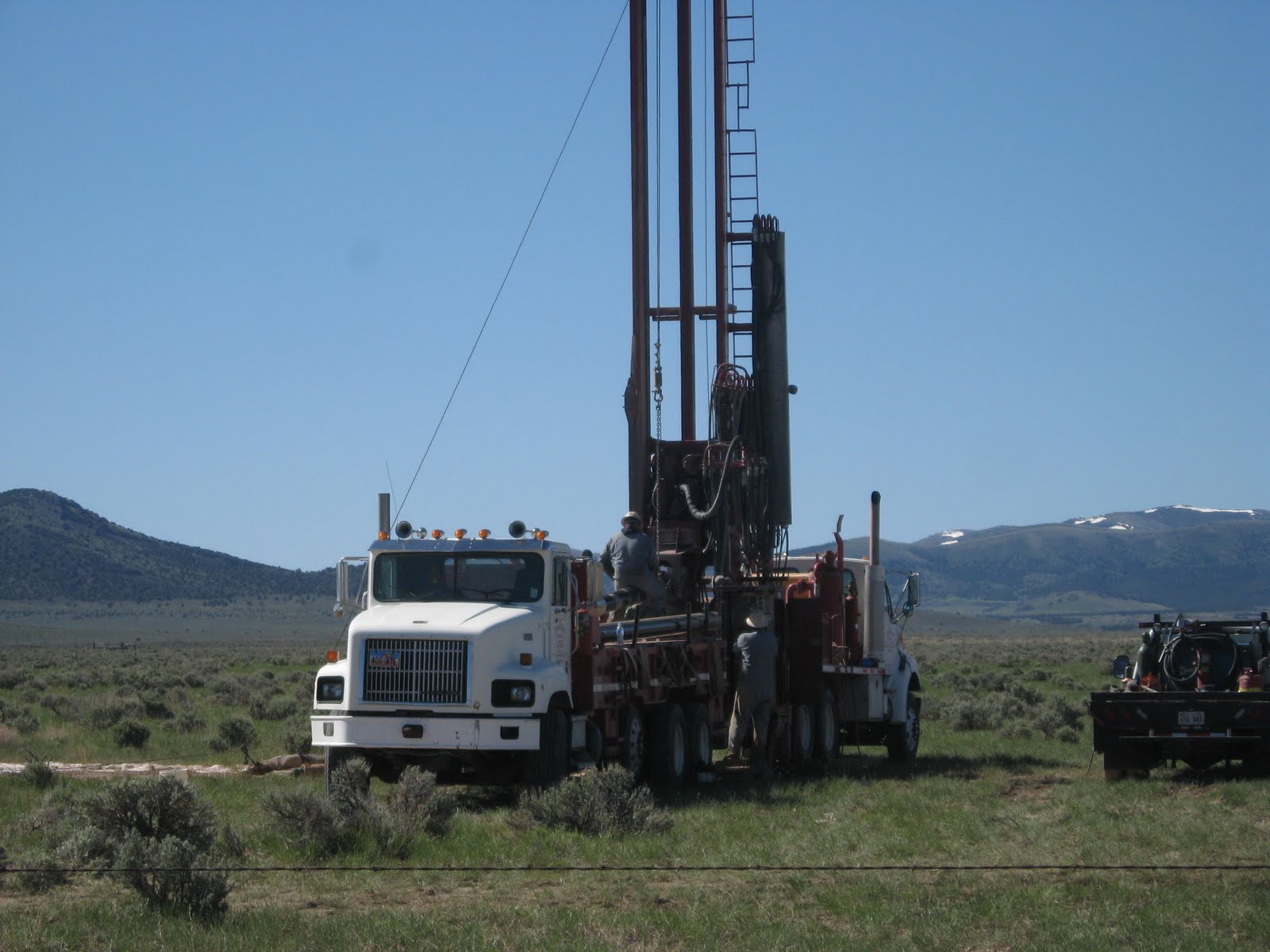
The next morning seemed to drag on as I waited for an update from the well driller. Finally around noon they called and reported that they had gone 40 more feet and were now getting about 40 gpm of good water. Instantly relief swept over me and the tension disappeared. Hollie was so excited that she took the kids over to the land to see the water they were pumping. By then they had gone the last 40 feet and were now getting 70 gpm. Then they explained that they still needed to perforate the pipe which they estimated that once done, would give us a total of 100 gpm. We are still waiting to find out the actual results of the pipe perforation, but regardless, we have enough water to irrigate some nice sized pastures. So we are already over budget, but at least we have water.
How's the Chicken?
Last Saturday was our first CSA Share delivery where we delivered to all of our customers. Preparing each 10lb share turned out to be a little more work than we had calculated. We tried to make sure that every share included both beef and pork as well as a variety of cuts. At first we second guessed our decision to limit CSA Shares. However, now we are glad that we did. Like everything else we have experienced, the first few tries require us to overcome a learning curve. Once we get into a good groove with our CSA Shares, we will reevaluate our ability to handle more CSA Shares.
Last Saturday was also our first chicken delivery. Aside from the chickens being a little smaller than we expected, we are very happy with the quality and flavor that our chicken offers. We have already had several emails from our customers who are thrilled with the superior meat quality and flavor. The chickens we delivered on Saturday were the New Hampshire Reds (Red Ranger). We found that the chickens that reached a 4lb dressed weight had considerably more breast meat than the 3-3.5lb chickens. Our next batch of New Hampshire Reds will be raised two weeks longer in order to get all of them into this 4 lb. range. We plan to have these ready the first weekend of August. In the meantime, our next group of chickens will be the Delaware and Plymouth Rock chickens. We expect that these chickens will be true to the heritage breeds with more slender dispositions and an abundance of flavor. We will harvest these chickens in June. For July we plan to harvest another type of chicken. This chicken will be the Slow Cornish Cross. These chickens have the heavy muscling and large breasts that many are used to. The difference is that they grow much slower allowing their skeletal system and organs to keep up with their growth rate. As a precaution, we are also feeding them a lower protein feed to ensure that they stay healthy and happy. This is simply an experiment, but so far we haven’t lost a single Slow Cornish Cross chicken which leaves us very optimistic.
Turkeys have been a bit more challenging than the chickens. Again, we blame ourselves for simply lacking the experience required to raise poultry on pasture on this level of production. However, how else can we learn unless we try? This past Friday we moved our 80 young turkeys from the brooder to the pasture. The forecast called for a little rain but in Vernon it decided to snow. Sadly, we found 17 turkeys that didn’t make it through the night. Had we known it would get cold enough to snow, we never would have moved them from the brooder. Interestingly, all but two of the 17 were Bourbon Reds. The Royal Palms seem to be much more hardy and cold tolerant. This is good for us to know as Vernon is rather cold. In fact, we run the furnace in our home from September to the first of June. This only leaves about three months of warm weather. Even during these three months, we have day/night temperature differences of 40-50 degrees. This kind of weather can be hard on certain breeds of animals which is partly why this year has been so challenging. Since, nobody in Vernon or Utah for that matter, has raised large numbers of heritage poultry, we really have no record to reference. We are learning as we go. We have helped several other small farms who are getting started in Utah by sharing our experiences so that they might avoid some of the problems we have incurred. We are learning (the hard way) which breeds are better suited for our climate. We are confident that by next year we will have a much better success rate.
As mentioned above, we have already heard back from several customers that the chicken is fantastic. However, if anybody else has had a chance to try the chicken, we would love to hear your feedback. What do you think of our idea to raise Slow Cornish Cross? Do you like the idea of more breast meat or oppose the use of non heritage breeds? Remember we we want to be your farmer. This means we need to know what kind of food you want. We look forward to hearing your ideas!
Last Saturday was also our first chicken delivery. Aside from the chickens being a little smaller than we expected, we are very happy with the quality and flavor that our chicken offers. We have already had several emails from our customers who are thrilled with the superior meat quality and flavor. The chickens we delivered on Saturday were the New Hampshire Reds (Red Ranger). We found that the chickens that reached a 4lb dressed weight had considerably more breast meat than the 3-3.5lb chickens. Our next batch of New Hampshire Reds will be raised two weeks longer in order to get all of them into this 4 lb. range. We plan to have these ready the first weekend of August. In the meantime, our next group of chickens will be the Delaware and Plymouth Rock chickens. We expect that these chickens will be true to the heritage breeds with more slender dispositions and an abundance of flavor. We will harvest these chickens in June. For July we plan to harvest another type of chicken. This chicken will be the Slow Cornish Cross. These chickens have the heavy muscling and large breasts that many are used to. The difference is that they grow much slower allowing their skeletal system and organs to keep up with their growth rate. As a precaution, we are also feeding them a lower protein feed to ensure that they stay healthy and happy. This is simply an experiment, but so far we haven’t lost a single Slow Cornish Cross chicken which leaves us very optimistic.
Turkeys have been a bit more challenging than the chickens. Again, we blame ourselves for simply lacking the experience required to raise poultry on pasture on this level of production. However, how else can we learn unless we try? This past Friday we moved our 80 young turkeys from the brooder to the pasture. The forecast called for a little rain but in Vernon it decided to snow. Sadly, we found 17 turkeys that didn’t make it through the night. Had we known it would get cold enough to snow, we never would have moved them from the brooder. Interestingly, all but two of the 17 were Bourbon Reds. The Royal Palms seem to be much more hardy and cold tolerant. This is good for us to know as Vernon is rather cold. In fact, we run the furnace in our home from September to the first of June. This only leaves about three months of warm weather. Even during these three months, we have day/night temperature differences of 40-50 degrees. This kind of weather can be hard on certain breeds of animals which is partly why this year has been so challenging. Since, nobody in Vernon or Utah for that matter, has raised large numbers of heritage poultry, we really have no record to reference. We are learning as we go. We have helped several other small farms who are getting started in Utah by sharing our experiences so that they might avoid some of the problems we have incurred. We are learning (the hard way) which breeds are better suited for our climate. We are confident that by next year we will have a much better success rate.
As mentioned above, we have already heard back from several customers that the chicken is fantastic. However, if anybody else has had a chance to try the chicken, we would love to hear your feedback. What do you think of our idea to raise Slow Cornish Cross? Do you like the idea of more breast meat or oppose the use of non heritage breeds? Remember we we want to be your farmer. This means we need to know what kind of food you want. We look forward to hearing your ideas!
Thursday, May 20, 2010
Bigger Farm

Some of our Berkshire pigs enjoying new pasture
Have you ever found yourself playing a board game like Risk or Monopoly where you go all out in an effort to win the game? Where you make moves that are somewhat risky, where you spread yourself a little thinner than is comfortable? This is how I often find myself playing such games. Usually I end up losing but every once in a while I catch a break and the strategy pays off. Usually it requires a little luck to gain some momentum, but once you get going, you see the light at the end of the tunnel and you know you are going to win. I am sure that there is a smart person out there who has a term for such a situation/strategy. Well, apparently, I like to play life the same way as this is the situation I now find myself in. Only, I am still hoping for that little bit of luck to gain some momentum.
Our little farm continues to grow and we continue to learn along the way. This year we decided to start offering pasture raised chicken and turkey. We have raised poultry for years, but never on this scale. As we now know, raising poultry 10-20 birds at a time is vastly different from raising 400-500 birds at a time. There is very little room for error as we sadly learned when one of our brooders went out last month. Of course, as luck would have it, it went out on a particularly cold night causing us to loose half the chicks in one of the brooders. Combine that with a slower than expected growth rate from our Plymouth Rock and Delawares has left has feeling spread thin. While we look forward to harvesting our first chickens of the year, today, we were sad to inform many of our customers that we would not be able to meet our delivery goals. That one brooder incident also cost us a lot of money. Our spirits were lifted however, when email after email returned from our customers expressing sympathy and understanding. We were so nervous that some would be upset, and while I am sure that some are annoyed, all have been very good and easy to work with. Several reminded us that such incidents are part of membership in a CSA. While we acknowledge this fact, we will still deliver the chickens we said we would, just a little late. We would like to thank our customers for their loyalty and understanding.

New Hampshire Reds (aka Red Rangers) on our pasture
While it will take until July to get fully caught up on our chicken orders, we are optimistic with our chicken operation as our mortality rate is getting lower with each group of chicks/chickens. Also, in seeking out the best chicken breed for our climate (by experimenting in raising 6 breeds), we have found a breed of chicken that we particularly like. We have selected the Red Ranger which as it turns out is actually the New Hampshire Red. This chicken is very meaty and hearty. They grow well, range well, and don't peck each other like other breeds do. They are well proportioned, not slender like some of the other Heritage Breeds, and not unnaturally large in the breast like the Cornish Cross. They are just right for our farm when all things are considered. Being able to discover the right breed this early in our chicken venture is that "little bit of luck" we need to get some momentum going.
Some very exciting (and scary) news is that just as our little farm was busting at the seams, we were able to close on a new piece of farm ground. The piece we are on now is 3 acres with the cows on leased pasture. Our new land is 20 acres in size and located just 1 mile down the road from where we live now. While 20 acres is a lot of land to most city folks, it is scarcely a building lot to some country folks. However we are grateful and happy for this land and will utilize it to the best of our ability. Since we can't afford to keep our current place and buy the land, we decided to build a home on the new land and sell our current home. This will also give our family a little more room as we too are busting at the seams in our 2 bedroom 1 bath house. The land we just bought offers beautiful, unobstructed views of the mountains and is on the edge of town. The land has only been used to graze cattle on it for decades. This means that the ground is clean of any pesticides and gives us a completely clean slate to build our farm upon. However, now is when the real work begins. While keeping up with our current operation, we are going to attempt to put up new fencing, build a barn, drill a well, install irrigation, establish new pastures, set up new pens with sorting and loading chutes and run power and water to all the areas where we will be raising animals. Somewhere in there we will likely sell our house which will require us to move to a temporary location until our new house is finished. We are still not sure how that is going to work out, but will figure it out as we go.
In purchasing more ground, we are hoping to raise more animals and reduce our long wait lists. We are especially going to focus on ramping up our pork and chicken production. We also are planning to offer more on farm activities like regular farm days where customers can come tour the farm. We are even thinking of doing some camping activities where our customers can spend the night and then help out on the farm the following morning. The starry nights that Vernon's remote location offers is a site few people have experienced. We have lots of other ideas we are bouncing around as well including my own secret project that will take transparency in the way your food is raised to a whole new level!
While expanding our farm involves some risk, we are confident in our investment given the strong response we continue to receive. Hopefully with a little luck, we can gain the momentum we need to make offering locally grown, pasture raised, all natural, humanely treated, gourmet quality pork, beef, chicken, and turkey a winning venture here in Utah.
Subscribe to:
Posts (Atom)